
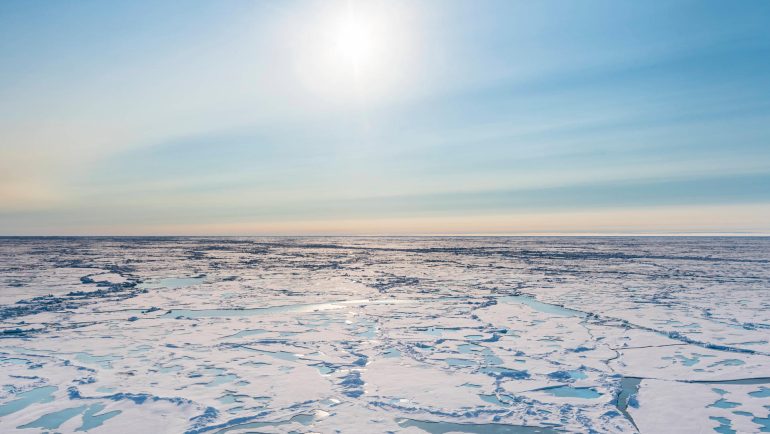
There may be less and less snow around the North Pole in 30 years’ time. The reason for this, among other things, is being attributed to global warming. This can be a problem not only for humans.
According to a study, the Arctic may receive more rain than snow in a few decades. The change will probably come decades earlier than previously expected, write scientists from the University of Manitoba in Canada and the US National Snow and Ice Data Center in a scientific article in the journal “Nature Communications.” Causes include global warming and a decline in sea ice.
The change will be felt differently depending on the Arctic region and time of year, predict scientists based on different climate data models. For example, between 2050 and 2080, there may be more rain than snow in autumn. This change was previously predicted for 2070 to 2090. If we succeed in slowing global warming, these changes in the Arctic could potentially be at least partially slowed.
“The challenge we are seeing in the Arctic today is that it is changing so rapidly that wildlife is not able to adapt,” said Mark Serez, director of the National Snow and Ice Data Center. “This is a problem not only for reindeer, caribou and musk oxen, but also for those in the north who depend on them.”

Sophie MacKenzie is a contributor to CA News Ottawa, covering news, politics, business, technology, sport, entertainment, and lifestyle. She focuses on clear, accurate reporting and useful information that helps readers stay informed about current affairs and developments that shape their communities. Her work highlights relevant stories, emerging trends, and important issues, presenting them in a balanced, accessible, and reader-friendly manner.